The numbers go on the table
Site cost, hard cost, soft cost, the capital stack, and what the return actually looks like. Not a teaser sheet — the same underwriting we work from.
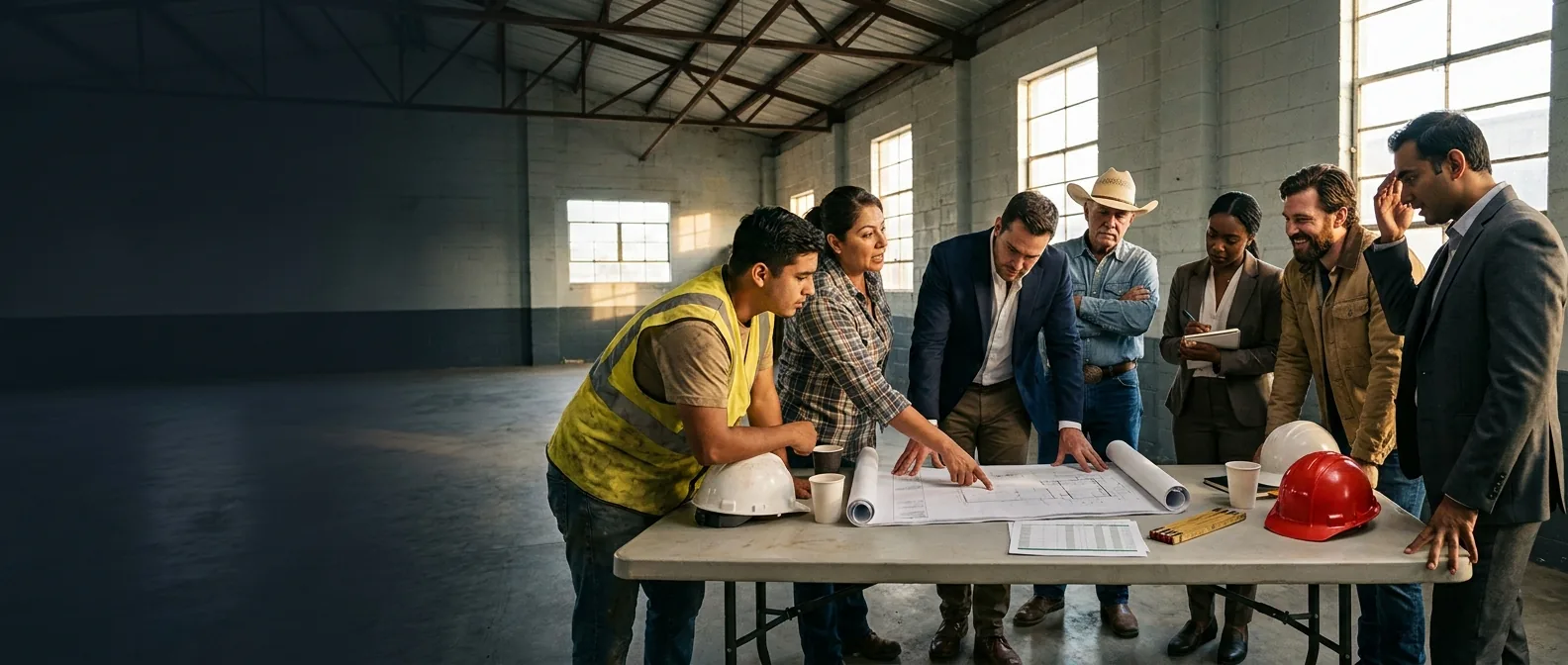
REDPartners runs open working sessions in the markets we develop. The numbers go on the table, the local trades are in the room, and nobody needs an appointment to hear how a project gets financed and built. Come to one. Bring what you can.
A note from the founder
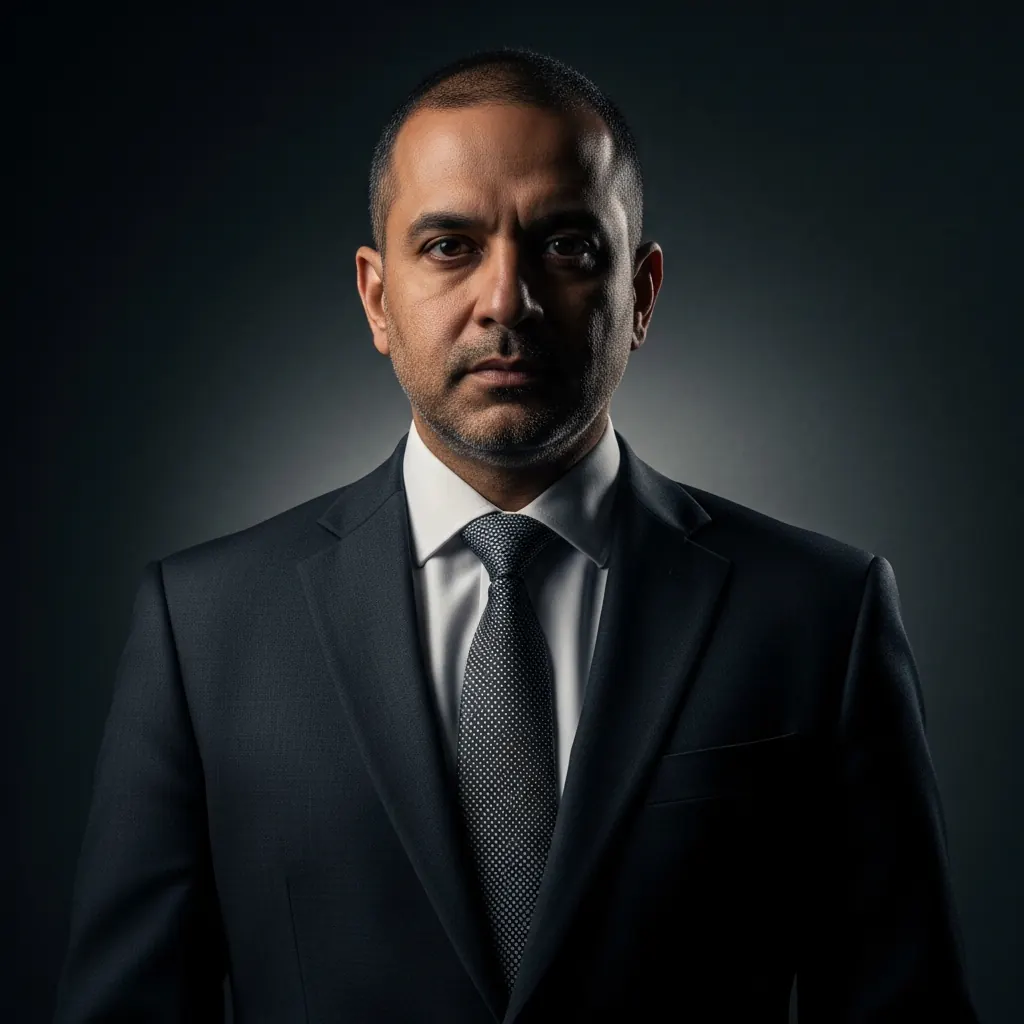
Babar Khan, Founder & Managing Partner
My goal is not to take public money and turn it into more money for myself. My first priority is that the people in a locality get to feel what it is to work together and build the way the so-called big firms build.
There is a myth that Americans stand in line their entire life and only a few ever make it through. That trend has reached its expiration. We work together, and we make sure nobody is left behind.
Your tax dollar should not leave your locality. Contracts should reach the businesses run by the people who live there. Your legislature answers to you and your council sits in your own town — that is the entire point of them. Local business has to be supported by the people it serves, and then it repeats: we mind our area, others mind theirs.
We are not going to study your town, prove out a business model with what we learned, then turn around, sell it back to you, and tax you on top of it. No baseless idea gets born here.
And when I say we are up against something, I do not mean Red against Blue, Black against White, or Christian against Muslim. Keeping people busy with that is the oldest trick there is, and it always arrives in the name of security. We are chosen for our own society. We do not need an outsider signing a policy to be enforced on us.
History is not clean. We know that. We still love our society and the people around us, and we are going to take charge of our own business, our own buildings, and the dollars spent in our name.
Keep it simple and clean. Watch the base, take charge of your own matter, and come sit at the table. Bring what you can, and let me build this in your locality.
The invitation
Why I am not going to sell you my expertise, why entitlement is the part nobody teaches you at a conference, and what I actually want from a room in your locality.
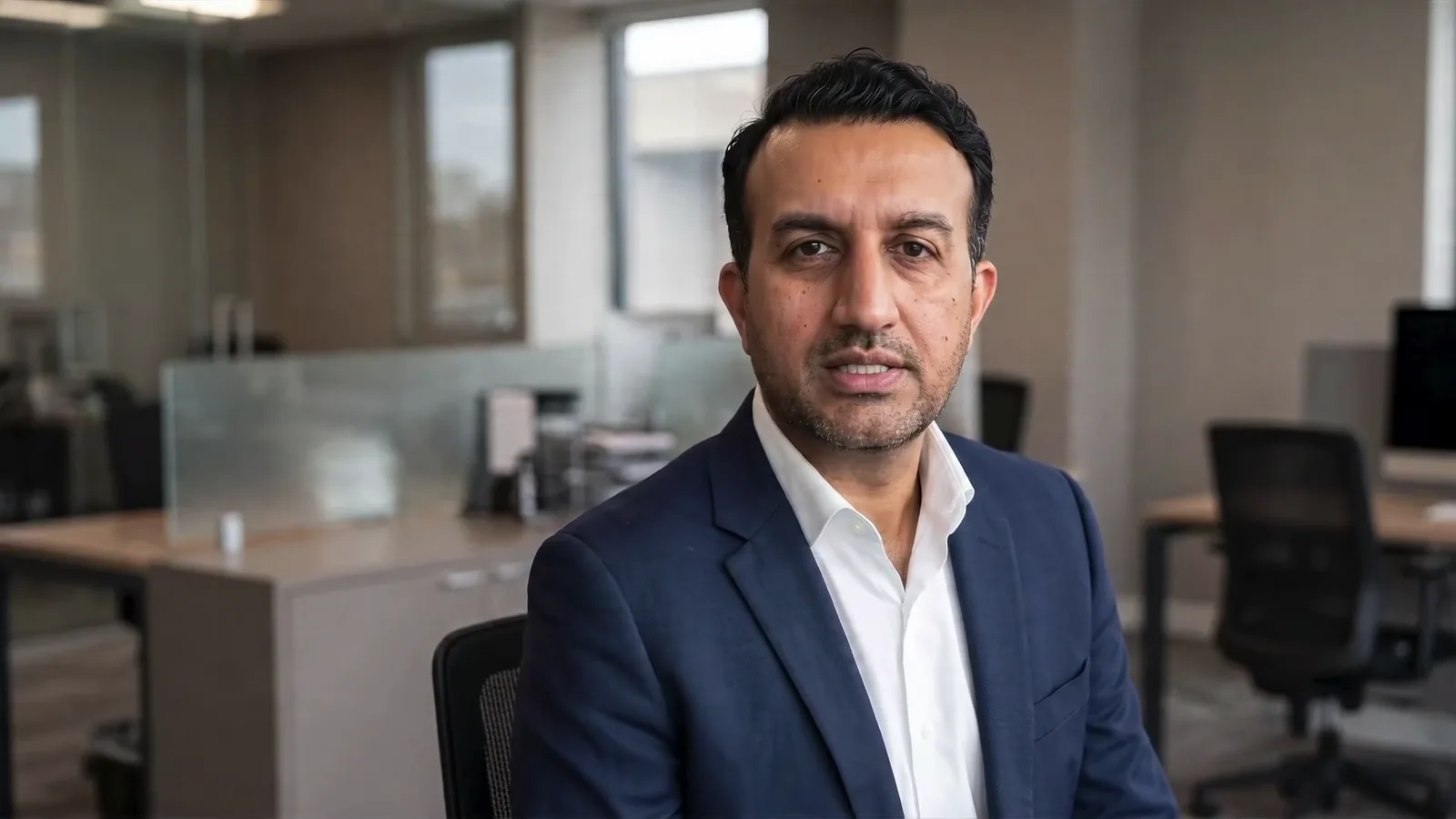
Site cost, hard cost, soft cost, the capital stack, and what the return actually looks like. Not a teaser sheet — the same underwriting we work from.
Contractors, subs, and suppliers from the locality look at the work while it can still be shaped, so the bid list is not decided three states away.
If you hold a parcel, you are in the same room as the people who would fund it. No chain of intermediaries deciding what you hear.
Nothing moves to a side room. If an answer is only good in private, it was never an answer.
Where local officials choose to attend, they receive the same presentation at the same time as the residents it affects. No advance version.
Who does what, by when, and what it costs. One page. Simple and clean.
The format does not change from market to market, or from a county hall to a full auditorium. Only the site, the numbers and the people in the chairs do.
Most evenings
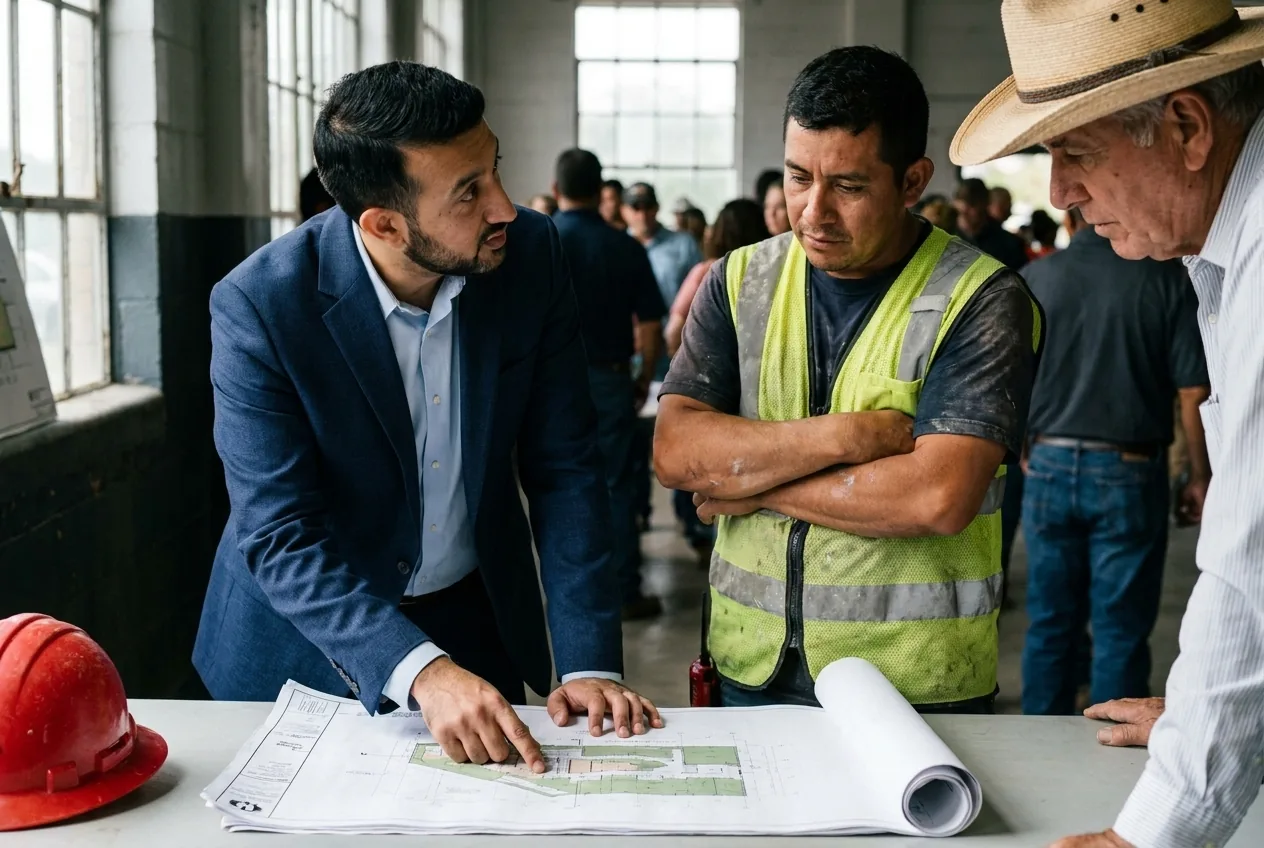
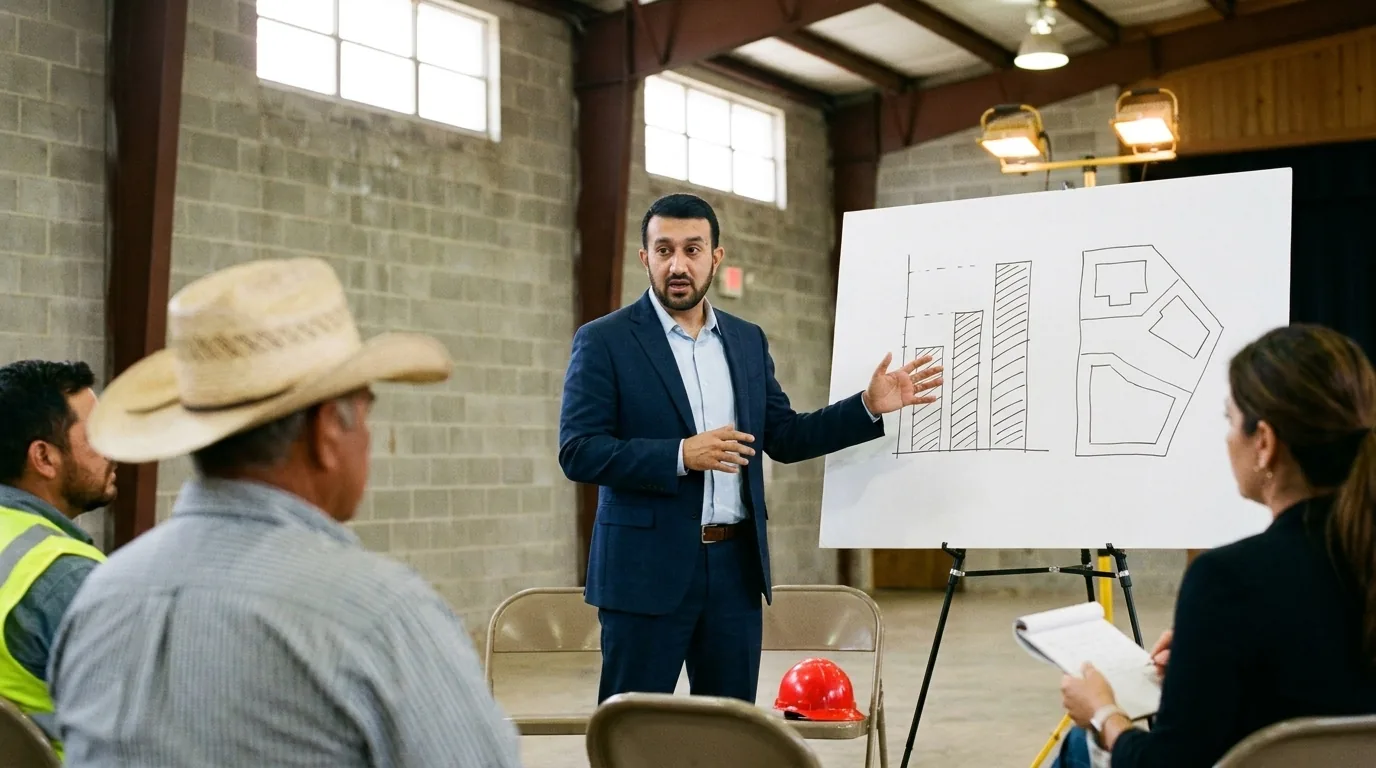
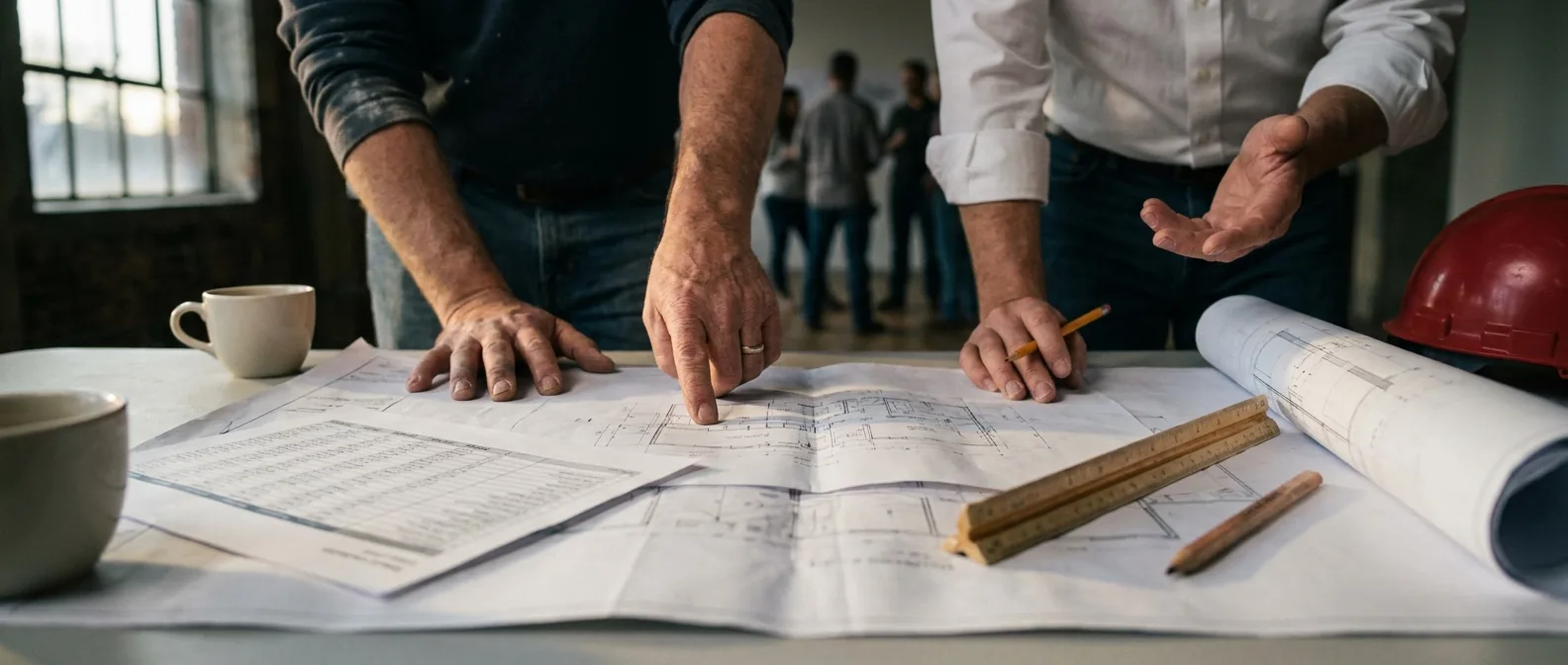
A hall, a folding table, and the drawings out where anyone can reach them. This is the bulk of what we do and the format everything else is built from.
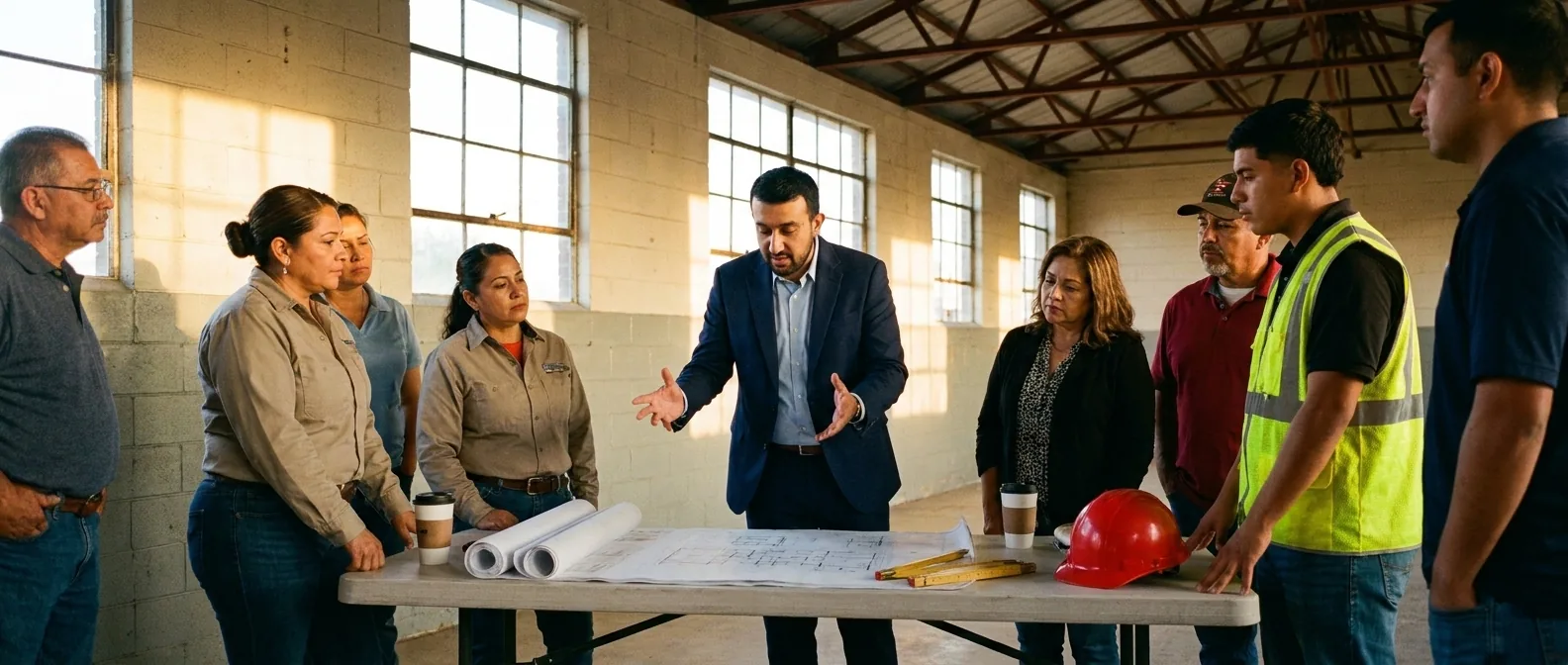
When word gets around
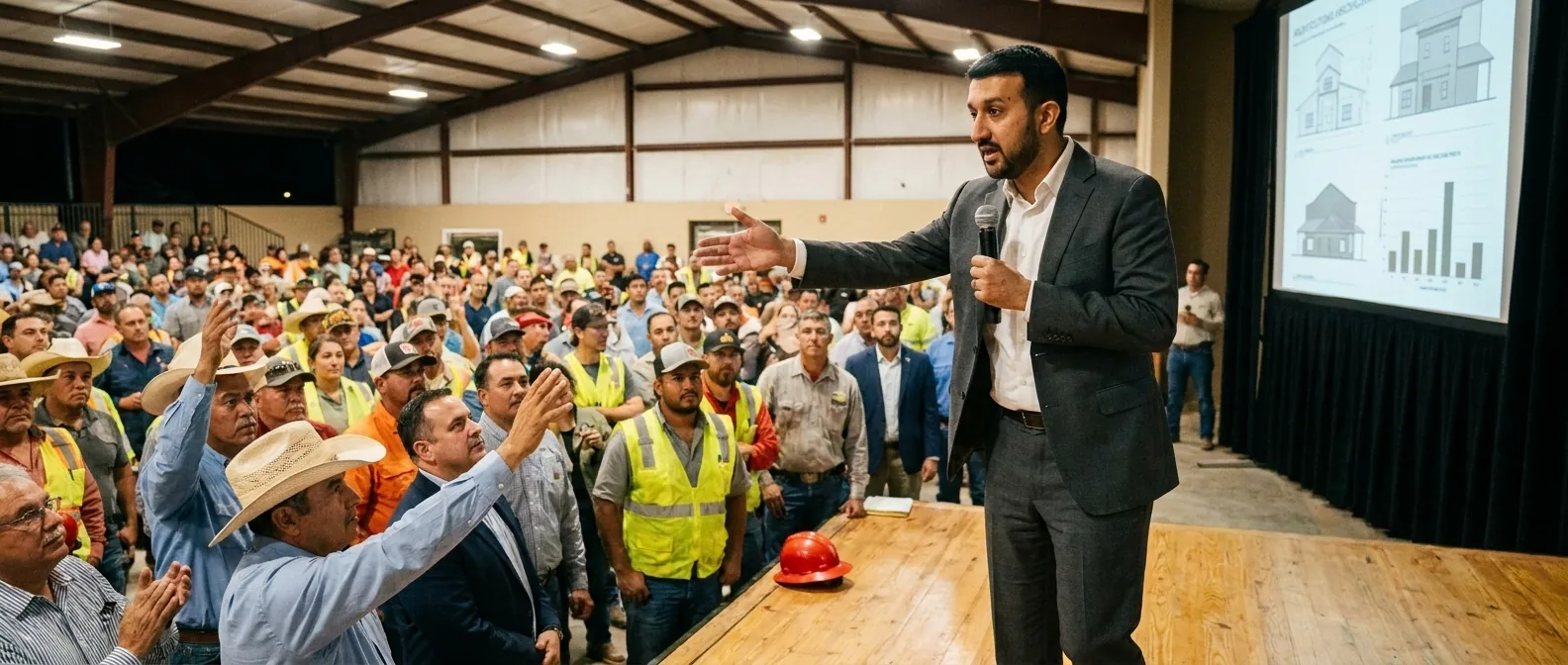
Some rooms fill past the chairs we set out. Nothing about the format changes when that happens — the microphone just has to travel further.
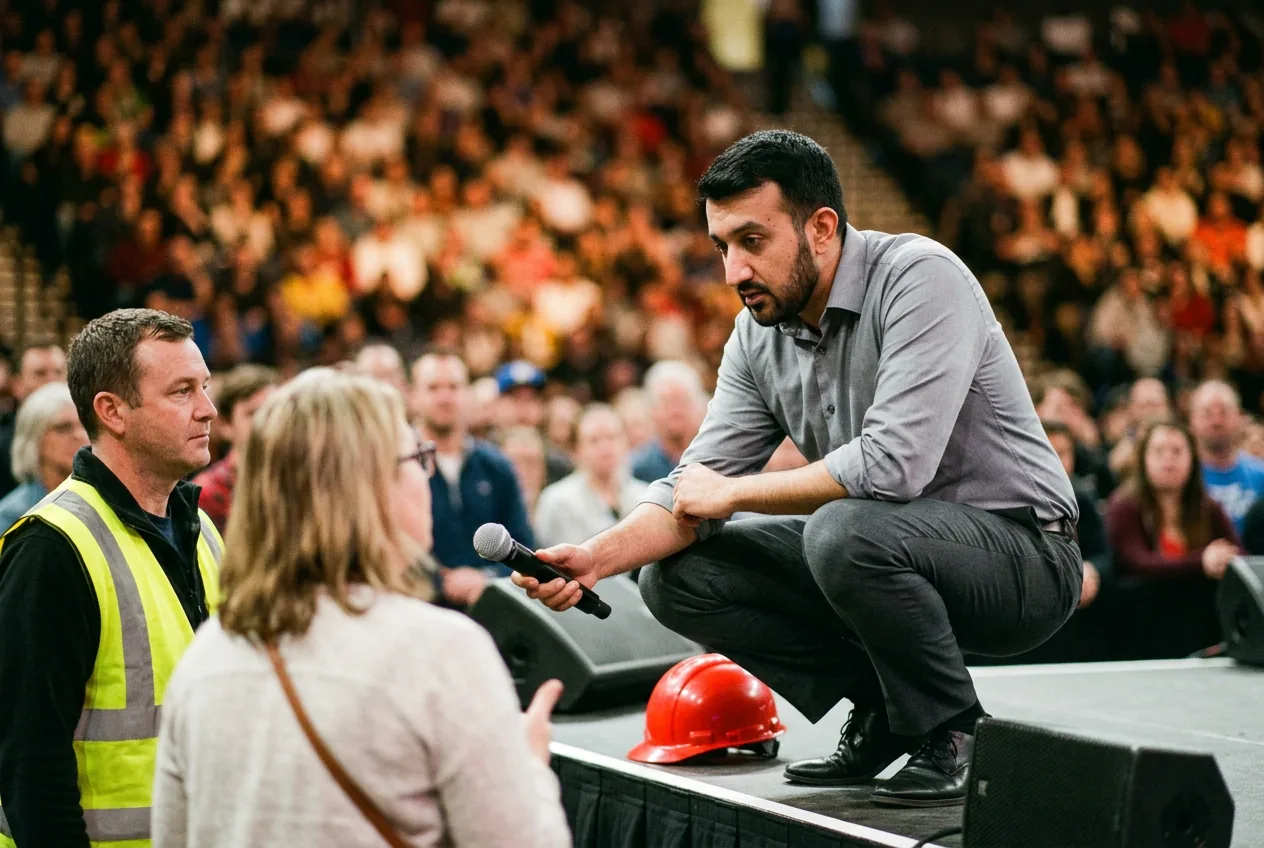
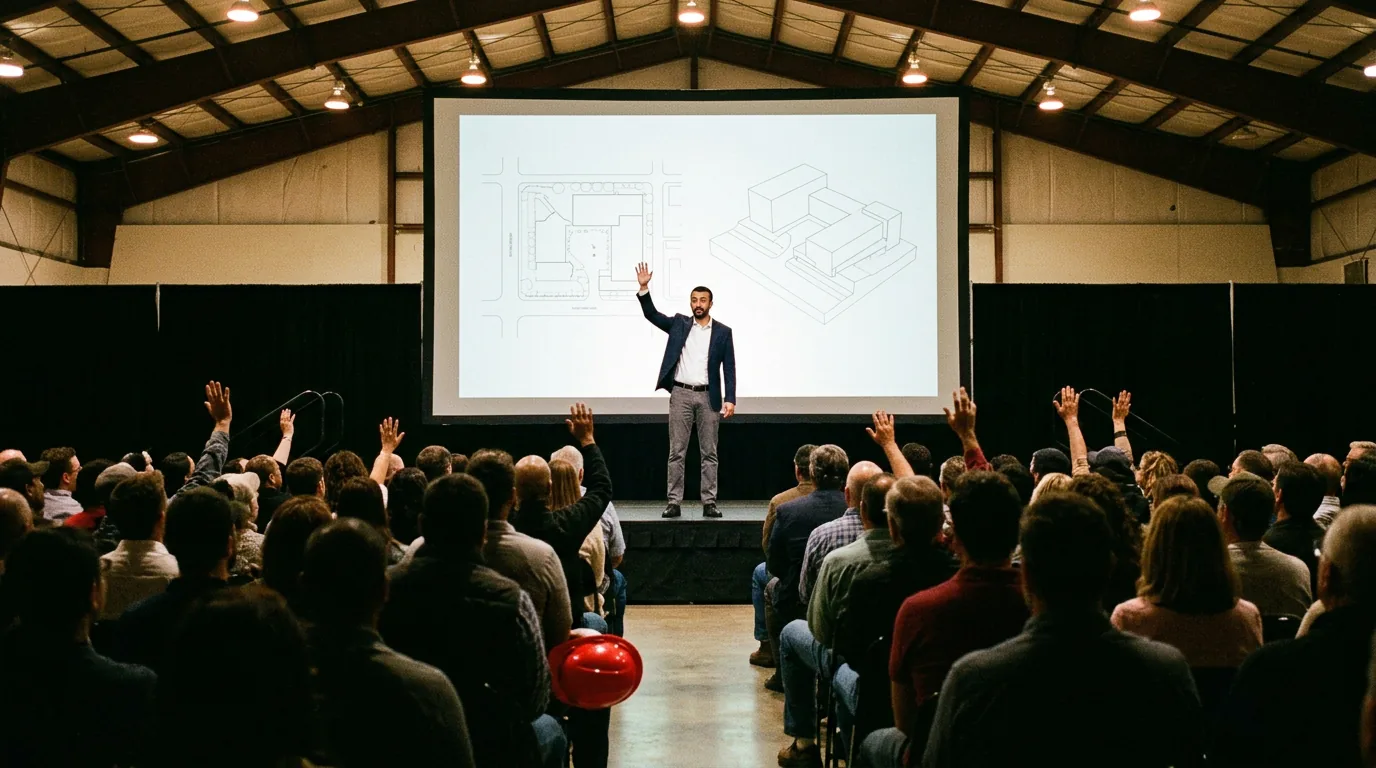
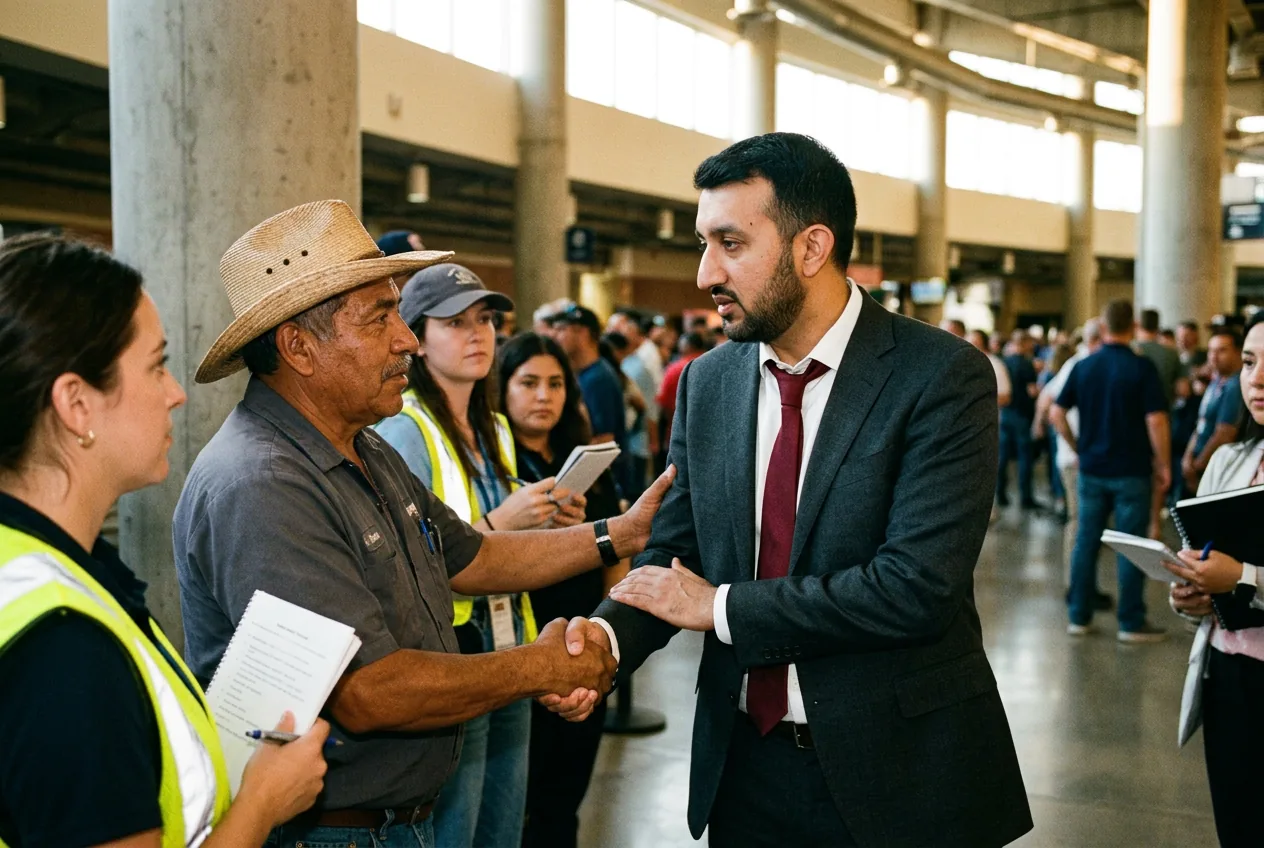
When a pipeline is real
Once projects are financed and moving, the whole pipeline gets presented at the scale it will be built — to the people whose town it is going into and to the capital behind it, in the same room on the same evening.
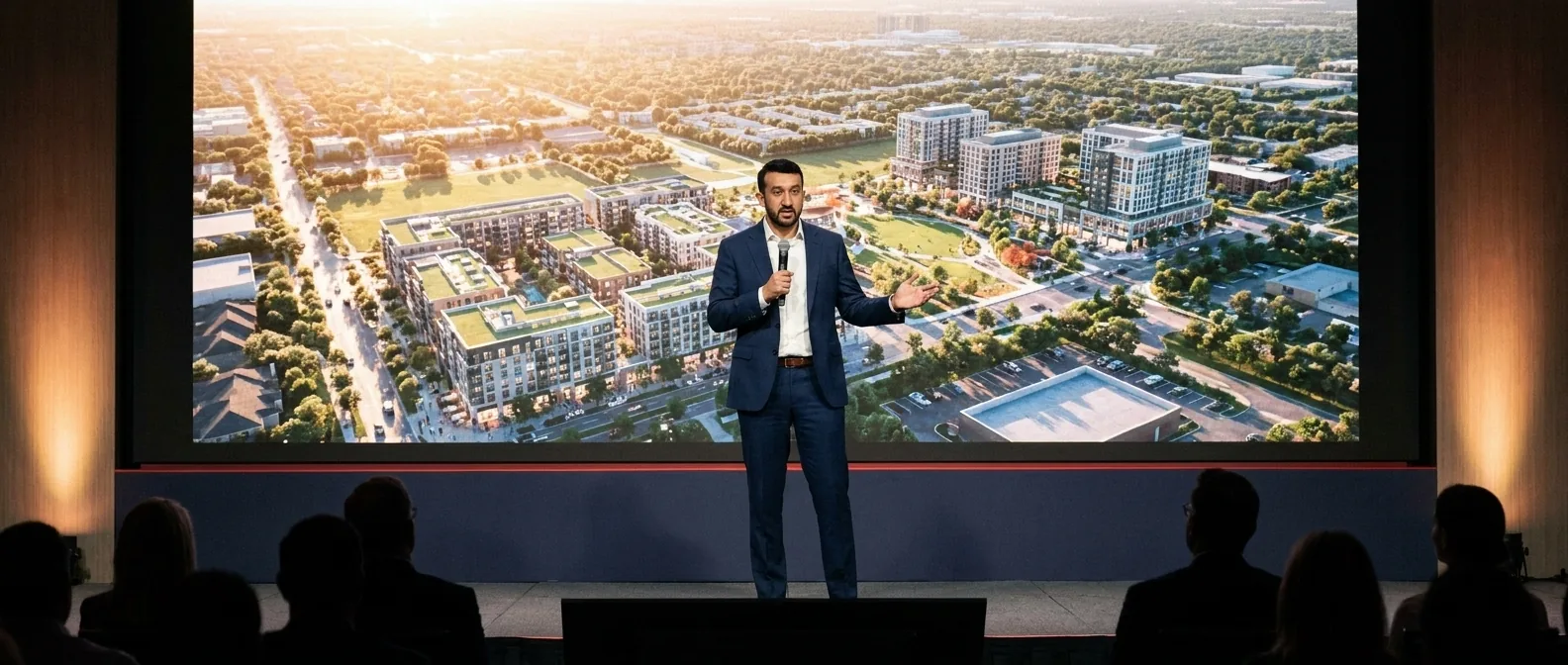

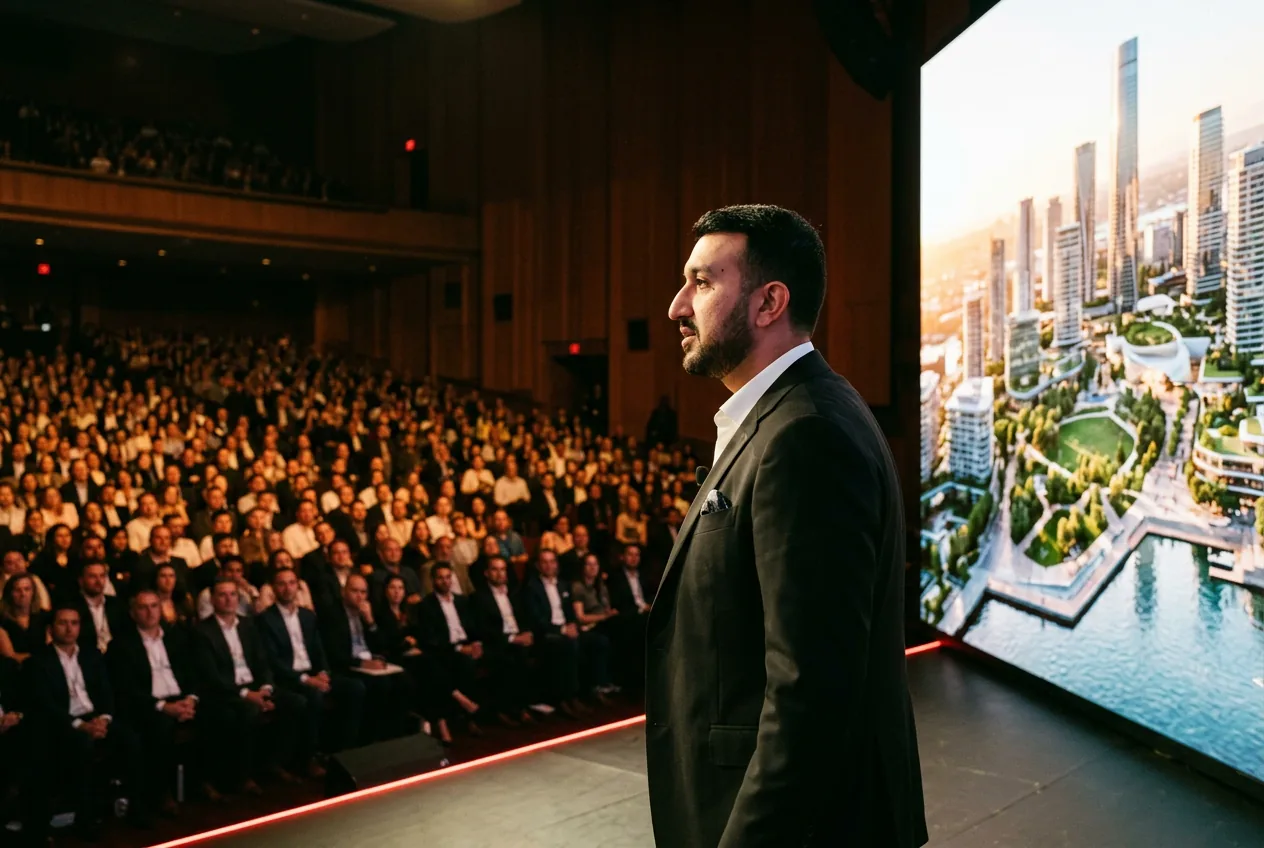
Depictions of the session format.
Who is behind the table
Land, capital and delivery — what we do, and why a principal leads every site rather than a representative.

Loading the schedule…
There is no invitation list. If any of these describes you, the session is for you.
You hold a parcel and want to know what it supports, what it is worth entitled, and whether you would rather sell it, lease it, or take a position in what gets built on it.
You run a crew in this market and want on the bid list for work that is funded, scoped, and actually going to break ground.
You would rather your capital sat in a building you can drive past than in a fund that will not tell you what it owns.
You need space, or you need the corridor around you to stop declining. Both are development questions and both get answered here.
You live here, it is your council, and it is your tax base. That is a sufficient reason to be in the room, and no one will ask you for a second one.
You are asked to evaluate proposals that arrive finished. Come see one while it is still being formed, and say what will not work.
Stated as refusals rather than promises. What a council awards or a market returns is not ours to guarantee — how this firm behaves is, and you can hold us to it.
If a project uses an incentive, an abatement, or a public dollar, the arithmetic behind that ask is presented in an open session before it is requested — not after it is granted.
We do not study a market, build a model out of what it taught us, sell that model back to the people who taught it, and charge again on top.
Trades, suppliers, and vendors are sourced in the locality first. Outside capacity comes in only when local capacity is genuinely absent, and we say so out loud when it does.
We do not trade on Red against Blue, one color against another, or one faith against another. That fight is how attention gets taken off the balance sheet, and we will not run it.
Everything presented at a session has a site, a cost, a source of capital, and a named person accountable for it. Without those four, it does not get shown.
A parcel, a crew, capital, a room we can use, or nothing but your attention and your questions. All of it counts, and none of it is a prerequisite for showing up.